
LA home addition costs: $250-$650/sqft guide for 2026
Planning a home addition in Los Angeles means navigating costs that range from $250 to over $600 per square foot, complex permitting rules, and seismic requirements unique to the region. Many homeowners struggle to choose between second-story builds, ADUs, room expansions, or garage conversions without clear guidance on costs, regulatory hurdles, and long-term value. This guide breaks down each addition type with transparent data on pricing, permits, and practical selection criteria, empowering you to confidently plan an expansion that fits your space, budget, and lifestyle goals.
Table of Contents
- How To Choose The Right Home Addition: Key Selection Criteria
- Popular Types Of Home Additions In Los Angeles
- Cost Comparison And Key Differentiators Of Home Addition Types
- Permit, Regulatory, And Structural Considerations In Los Angeles
- Making The Best Choice: Situational Recommendations For Los Angeles Homeowners
- Explore Expert Home Remodeling Services In Los Angeles
- Frequently Asked Questions About Home Additions In Los Angeles
Key takeaways
| Point | Details |
|---|---|
| Addition costs vary dramatically | Prices span $250 to $650+ per square foot in LA depending on complexity and structural needs. |
| Permitting is costly and complex | Expect $3,000 to $10,000+ in permit fees plus mandatory seismic and zoning compliance. |
| Second-story and ADUs maximize value | These options deliver the highest return on small lots but require larger budgets. |
| Contractor expertise matters | Transparent pricing and local code knowledge prevent costly delays and ensure quality. |
| Match addition to your goals | Choose based on lot size, intended use, budget, and long-term property value plans. |
How to choose the right home addition: key selection criteria
Selecting the right home addition starts with a clear evaluation framework tailored to Los Angeles realities. Begin by analyzing cost per square foot against your total budget and intended use. A second-story addition may run $400 to $650 per square foot, while a simple room addition might cost $250 to $350, so aligning expense with value is critical.
Research local permitting and zoning requirements early in your planning process. Los Angeles imposes strict building codes, seismic retrofitting mandates, and neighborhood-specific restrictions that can derail projects or inflate costs unexpectedly. Understanding these constraints upfront helps you choose feasible options and avoid surprises.
Define your intended use and future value goals to prioritize the right addition type. Are you seeking rental income from an ADU, extra bedrooms for a growing family, or a kitchen expansion to boost resale appeal? Each goal points toward different solutions with varying ROI potential.
Consider structural feasibility based on your lot size, soil conditions, and existing foundation. Small urban lots often favor vertical second-story builds, while larger properties may accommodate sprawling single-level expansions or detached ADUs. Engage contractors who evaluate site constraints honestly before committing to plans.
Select contractors who provide transparent pricing and high-quality craftsmanship. Look for detailed estimates that itemize materials, labor, permits, and contingencies. Experienced home remodeling in Los Angeles professionals should explain code requirements clearly and offer references from similar projects in your neighborhood.
Pro Tip: Request itemized bids that separate base construction costs from permit fees, seismic upgrades, and finish materials. This transparency helps you adjust scope without sacrificing quality if budget constraints arise mid-project.
Popular types of home additions in Los Angeles
Los Angeles homeowners typically consider several main addition types, each suited to different needs and lot characteristics. Understanding these options helps you match solutions to your lifestyle and property constraints.
-
Second-story additions maximize usable space on small urban lots by building upward instead of outward. These additions create entire new living levels without sacrificing yard space, making them ideal for dense neighborhoods where setback rules limit ground-level expansion. Expect higher costs due to foundation reinforcement and structural engineering.
-
Accessory Dwelling Units (ADUs) create independent living spaces perfect for rental income, multigenerational housing, or home offices. California’s streamlined ADU laws make these units easier to permit than traditional additions, though they still require separate utility hookups and code compliance. ADUs deliver strong ROI through rental potential or increased property value.
-
Room and bathroom additions expand core functional areas affordably by extending your existing footprint. Adding a bedroom, bathroom, or family room typically costs less than complex second-story builds because they use existing foundation systems and simpler structural connections. These additions suit homeowners seeking straightforward space increases without major architectural changes.
-
Kitchen expansions enhance your home’s main living hub and dramatically improve resale value. Opening walls to create open-concept layouts or extending kitchen footprints into adjacent spaces ranks among the most popular remodels in LA. These projects often combine structural work with high-end finishes, driving costs higher than basic room additions.
-
Garage conversions and sunrooms adapt existing structures to new uses at lower costs than ground-up construction. Sunrooms fit LA’s indoor-outdoor lifestyle by offering natural-light-filled transition spaces between home and yard. Garage conversions create livable square footage quickly, though you sacrifice parking and storage.
Cost comparison and key differentiators of home addition types
Understanding cost ranges from $250 to $650+ per square foot depending on addition complexity helps you budget realistically and compare options effectively. The table below breaks down typical costs for major addition types in Los Angeles.
| Addition Type | Cost Per Sq Ft | Total Cost Range | Key Differentiators |
|---|---|---|---|
| Second-story addition | $400-$650 | $120,000-$300,000+ | Requires foundation/seismic upgrades; maximizes small lots; highest complexity |
| ADU (new construction) | $350-$550 | $100,000-$250,000 | Independent utilities; rental income potential; streamlined permits |
| Bedroom addition | $250-$400 | $50,000-$120,000 | Extends existing footprint; moderate complexity; strong family value |
| Bathroom addition | $300-$500 | $40,000-$100,000 | Plumbing/electrical intensive; high resale ROI; moisture-proofing critical |
| Kitchen expansion | $350-$600 | $80,000-$200,000+ | High-end finishes; structural walls often involved; lifestyle/resale impact |
| Garage conversion | $150-$300 | $30,000-$75,000 | Lowest cost; uses existing structure; minimal permits; loses parking |
| Sunroom/porch enclosure | $200-$400 | $40,000-$100,000 | Natural light focus; simpler structure; suits climate; lifestyle enhancement |
Second-story additions and kitchen expansions rank among the most expensive because they demand extensive structural work, foundation reinforcement, and seismic upgrades mandated by LA building codes. These projects also require architect involvement and complex engineering calculations, adding professional fees to base construction costs.
Bedroom and room additions offer lower per-square-foot costs with strong value returns. By extending your existing footprint horizontally, these additions avoid the foundation and structural complexity of vertical builds, though they still require permits, utility extensions, and exterior finish matching.
Permit and structural upgrades add significantly to total costs. Budget $3,000 to $10,000+ for permits alone, plus potential seismic retrofitting expenses ranging from $5,000 to $30,000 depending on your home’s age and existing foundation type. These regulatory costs apply regardless of addition size.
Build-up versus build-out decisions hinge on lot constraints and budget. Second-story additions preserve yard space but cost 30% to 50% more than equivalent ground-level expansions due to engineering requirements. However, if setback rules or lot coverage limits prevent outward expansion, building up becomes the only viable path.
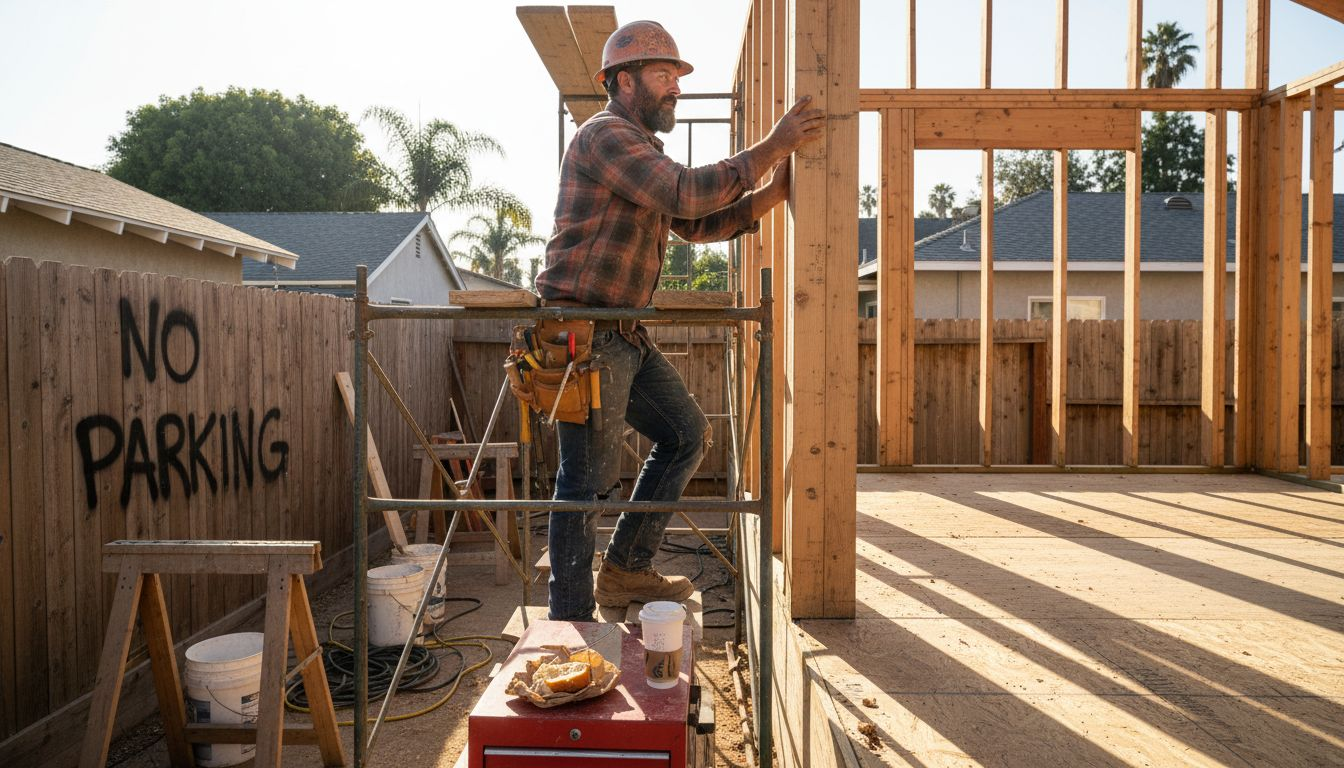
Pro Tip: Always request separate line items for permits, seismic work, and temporary support structures in contractor estimates. These costs can represent 15% to 25% of total project expense and vary dramatically based on your home’s specific conditions and remodeling services in Los Angeles provider expertise.
Permit, regulatory, and structural considerations in Los Angeles
Navigating Los Angeles permitting, seismic, and zoning rules represents one of the biggest challenges in home addition projects. Understanding these requirements upfront prevents costly delays and ensures code compliance throughout construction.
-
Permit fees and inspection processes can be complex and expensive. Permitting fees typically range from $3,000 to over $10,000 depending on project scope, with second-story additions and ADUs at the higher end. The city requires multiple plan checks, corrections, and site inspections at various construction stages, extending timelines by weeks or months.
-
Seismic retrofitting and load-bearing upgrades are often mandatory for additions in Los Angeles due to earthquake risk. Older homes lacking modern foundation anchoring or cripple wall bracing must undergo retrofitting before adding significant weight or square footage. These upgrades protect your investment but add $5,000 to $30,000+ to project costs.
-
Zoning laws restrict certain additions based on lot size, setback requirements, and neighborhood overlays. Your property’s R1, R2, or other zoning designation dictates maximum lot coverage, building height, and setback distances from property lines. Some historic or hillside neighborhoods impose additional design review requirements that lengthen approval processes.
-
Experienced contractors help navigate regulatory hurdles by maintaining relationships with city plan checkers, understanding local code interpretations, and submitting complete, compliant plans the first time. Working with licensed professionals familiar with LA Department of Building and Safety procedures saves months of back-and-forth corrections.
-
Proper compliance avoids costly delays and fines. Building without permits or deviating from approved plans can trigger stop-work orders, daily fines, and mandatory tear-down of non-compliant construction. Homes with unpermitted work also face challenges during future sales, as buyers and lenders require verification of legal additions.
Making the best choice: situational recommendations for Los Angeles homeowners
Applying all previous insights to your specific situation helps you select the addition type that delivers maximum value for your goals, property, and budget. Consider these practical scenarios common among LA homeowners.
Second-story additions suit homeowners on small lots requiring maximum space without sacrificing yard area. If your property sits in a dense urban neighborhood where setback rules prevent outward expansion, building up becomes the logical choice despite higher costs. Families needing multiple bedrooms or homeowners seeking dramatic square footage gains benefit most from this option.
ADUs work best for those seeking rental income, multigenerational living arrangements, or home office separation. If you have adequate yard space and want to generate passive income while building equity, an ADU offers strong ROI potential. California’s favorable ADU laws also streamline permitting compared to traditional additions, making them attractive despite substantial upfront costs.
Room additions provide straightforward, budget-conscious expansion for homeowners who need specific functional spaces like an extra bedroom, home office, or family room. If your lot allows outward building and you want to avoid the complexity and expense of second-story construction, a simple room addition delivers practical value at moderate cost.
Garage conversions offer cost-effective extra livable space when you’re willing to sacrifice parking and storage. Homeowners in walkable neighborhoods with street parking options can repurpose existing garage structures into bedrooms, offices, or entertainment spaces at half the cost of new construction, though resale impact varies by neighborhood.
Sunrooms and outdoor spaces enhance lifestyle and natural light for those prioritizing indoor-outdoor living over raw square footage. If you love LA’s climate and want transitional spaces that blur the line between inside and outside, sunroom additions deliver unique value that traditional rooms can’t match. These lighter structures also face fewer permit hurdles than full additions.
Ultimately, the best choice balances your immediate needs, long-term property plans, budget constraints, and lot characteristics. Consult with licensed home remodeling experts in Los Angeles who can assess your specific property and goals before committing to a direction.
Explore expert home remodeling services in Los Angeles
Turning your home addition vision into reality requires partnering with contractors who deliver transparent pricing and exceptional craftsmanship. After understanding addition types, costs, and regulations, your next step involves engaging professionals who navigate LA’s complex building environment confidently.
Trusted contractors provide clear cost estimates that itemize all expenses including permits, structural upgrades, materials, and labor. This transparency lets you make informed decisions and adjust scope without hidden surprises mid-project. Experienced teams ensure full compliance with Los Angeles building codes, seismic requirements, and zoning restrictions, protecting your investment from costly violations or delays.
High-quality craftsmanship delivers lasting value and satisfaction that exceeds basic code compliance. Professional builders use proven techniques, premium materials, and skilled trades to create additions that seamlessly integrate with your existing home while standing up to decades of use.
Flat Rate Remodeling Inc offers reliable, comprehensive professional home remodeling services in Los Angeles backed by over 25 years of experience. Their flat-rate pricing model eliminates guesswork, while their proven track record in ADUs, room additions, second-story builds, and full home renovations gives you confidence throughout your project journey.
Frequently asked questions about home additions in Los Angeles
How much does a typical home addition cost per square foot in Los Angeles?
Home addition costs range from $250 to over $650 per square foot depending on addition type and complexity. Simple room additions fall at the lower end, while second-story builds and kitchen expansions with high-end finishes reach the upper range. Always request itemized estimates that separate construction, permits, and structural upgrades for accurate budgeting.
What Los Angeles permits are required for building a second-story addition?
Second-story additions require multiple permits including building, seismic, and zoning approvals, with fees often between $3,000 and $10,000+ in Los Angeles. You’ll also need plan checks, structural engineering stamps, and multiple inspections throughout construction. Experienced contractors handle permit applications and coordinate inspections to keep projects on schedule.
How do I choose a contractor for a home addition in Los Angeles?
Prioritize licensed contractors with proven experience navigating LA building codes and seismic requirements. Require detailed, transparent cost estimates that itemize permits, structural work, materials, and labor separately. Check references from similar projects in your neighborhood, verify license status with the Contractors State License Board, and review online ratings for craftsmanship quality and communication.
How long does a typical home addition project take in Los Angeles?
Most home additions take four to nine months from design through final inspection, depending on complexity and permit approval speed. Simple room additions may complete in three to five months, while second-story builds or ADUs often require six to twelve months. Permitting alone can consume two to four months, so start planning well ahead of your target completion date.
Do home additions require seismic retrofitting of my entire house?
Not always, but Los Angeles often mandates seismic upgrades to existing foundations when adding significant weight or square footage. Older homes lacking modern foundation bolting or cripple wall bracing typically need retrofitting before addition work begins. A structural engineer evaluates your specific home during the design phase and recommends necessary upgrades to meet current code.
What’s the return on investment for different addition types in Los Angeles?
Kitchen and bathroom additions typically return 60% to 80% of costs at resale, while bedroom additions recover 50% to 70%. ADUs offer strong ROI through rental income potential, often generating $2,000 to $3,500 monthly rent in desirable LA neighborhoods. Second-story additions provide moderate resale returns but dramatically improve livability, making them worthwhile for long-term homeowners prioritizing function over immediate financial gain.
Recommended
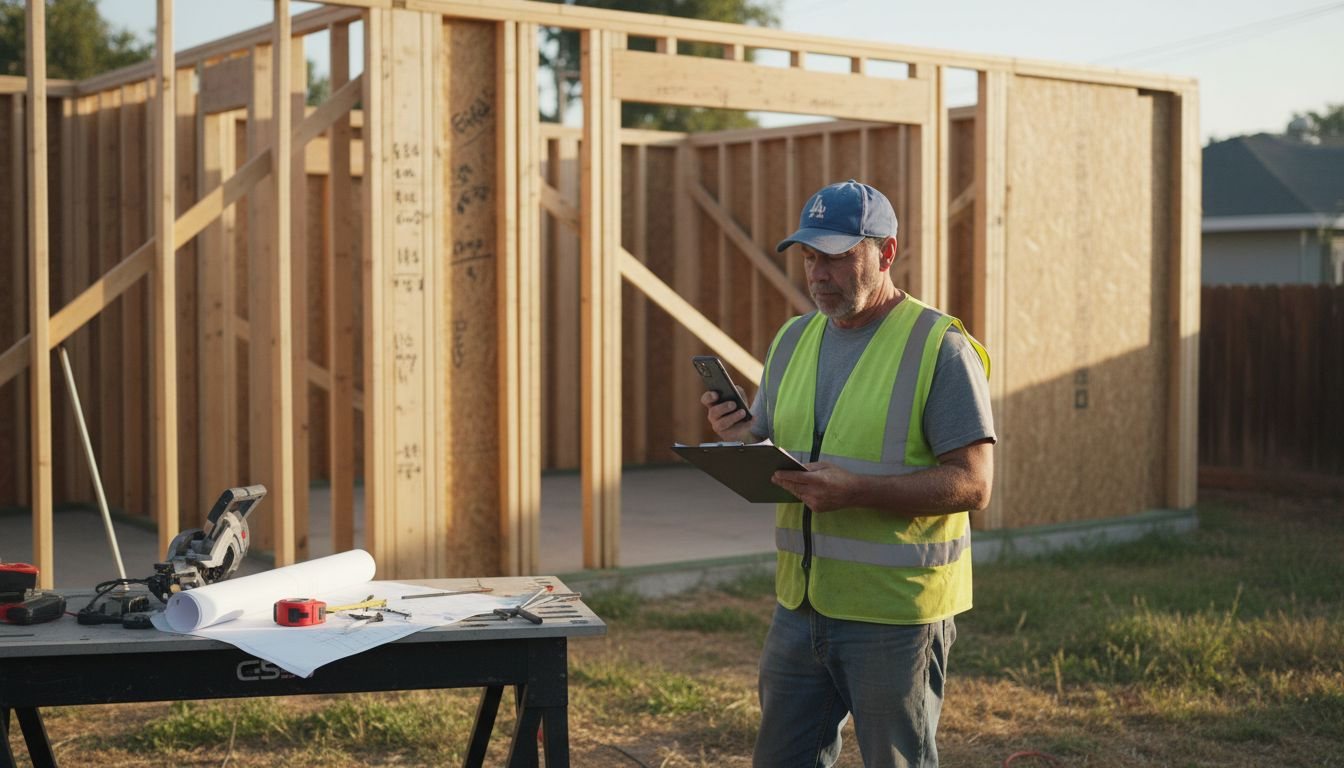
LA home addition costs: $250-$650/sqft guide for 2026
Planning a home addition in Los Angeles means navigating costs that range from $250 to over $600 per square foot, complex permitting rules, and seismic requirements unique to the region. Many homeowners struggle to choose between second-story builds, ADUs, room expansions, or garage conversions without clear guidance on costs, regulatory hurdles, and long-term value. This guide breaks down each addition type with transparent data on pricing, permits, and practical selection criteria, empowering you to confidently plan an expansion that fits your space, budget, and lifestyle goals.
Table of Contents
- How To Choose The Right Home Addition: Key Selection Criteria
- Popular Types Of Home Additions In Los Angeles
- Cost Comparison And Key Differentiators Of Home Addition Types
- Permit, Regulatory, And Structural Considerations In Los Angeles
- Making The Best Choice: Situational Recommendations For Los Angeles Homeowners
- Explore Expert Home Remodeling Services In Los Angeles
- Frequently Asked Questions About Home Additions In Los Angeles
Key takeaways
| Point | Details |
|---|---|
| Addition costs vary dramatically | Prices span $250 to $650+ per square foot in LA depending on complexity and structural needs. |
| Permitting is costly and complex | Expect $3,000 to $10,000+ in permit fees plus mandatory seismic and zoning compliance. |
| Second-story and ADUs maximize value | These options deliver the highest return on small lots but require larger budgets. |
| Contractor expertise matters | Transparent pricing and local code knowledge prevent costly delays and ensure quality. |
| Match addition to your goals | Choose based on lot size, intended use, budget, and long-term property value plans. |
How to choose the right home addition: key selection criteria
Selecting the right home addition starts with a clear evaluation framework tailored to Los Angeles realities. Begin by analyzing cost per square foot against your total budget and intended use. A second-story addition may run $400 to $650 per square foot, while a simple room addition might cost $250 to $350, so aligning expense with value is critical.
Research local permitting and zoning requirements early in your planning process. Los Angeles imposes strict building codes, seismic retrofitting mandates, and neighborhood-specific restrictions that can derail projects or inflate costs unexpectedly. Understanding these constraints upfront helps you choose feasible options and avoid surprises.
Define your intended use and future value goals to prioritize the right addition type. Are you seeking rental income from an ADU, extra bedrooms for a growing family, or a kitchen expansion to boost resale appeal? Each goal points toward different solutions with varying ROI potential.
Consider structural feasibility based on your lot size, soil conditions, and existing foundation. Small urban lots often favor vertical second-story builds, while larger properties may accommodate sprawling single-level expansions or detached ADUs. Engage contractors who evaluate site constraints honestly before committing to plans.
Select contractors who provide transparent pricing and high-quality craftsmanship. Look for detailed estimates that itemize materials, labor, permits, and contingencies. Experienced home remodeling in Los Angeles professionals should explain code requirements clearly and offer references from similar projects in your neighborhood.
Pro Tip: Request itemized bids that separate base construction costs from permit fees, seismic upgrades, and finish materials. This transparency helps you adjust scope without sacrificing quality if budget constraints arise mid-project.
Popular types of home additions in Los Angeles
Los Angeles homeowners typically consider several main addition types, each suited to different needs and lot characteristics. Understanding these options helps you match solutions to your lifestyle and property constraints.
-
Second-story additions maximize usable space on small urban lots by building upward instead of outward. These additions create entire new living levels without sacrificing yard space, making them ideal for dense neighborhoods where setback rules limit ground-level expansion. Expect higher costs due to foundation reinforcement and structural engineering.
-
Accessory Dwelling Units (ADUs) create independent living spaces perfect for rental income, multigenerational housing, or home offices. California’s streamlined ADU laws make these units easier to permit than traditional additions, though they still require separate utility hookups and code compliance. ADUs deliver strong ROI through rental potential or increased property value.
-
Room and bathroom additions expand core functional areas affordably by extending your existing footprint. Adding a bedroom, bathroom, or family room typically costs less than complex second-story builds because they use existing foundation systems and simpler structural connections. These additions suit homeowners seeking straightforward space increases without major architectural changes.
-
Kitchen expansions enhance your home’s main living hub and dramatically improve resale value. Opening walls to create open-concept layouts or extending kitchen footprints into adjacent spaces ranks among the most popular remodels in LA. These projects often combine structural work with high-end finishes, driving costs higher than basic room additions.
-
Garage conversions and sunrooms adapt existing structures to new uses at lower costs than ground-up construction. Sunrooms fit LA’s indoor-outdoor lifestyle by offering natural-light-filled transition spaces between home and yard. Garage conversions create livable square footage quickly, though you sacrifice parking and storage.
Cost comparison and key differentiators of home addition types
Understanding cost ranges from $250 to $650+ per square foot depending on addition complexity helps you budget realistically and compare options effectively. The table below breaks down typical costs for major addition types in Los Angeles.
| Addition Type | Cost Per Sq Ft | Total Cost Range | Key Differentiators |
|---|---|---|---|
| Second-story addition | $400-$650 | $120,000-$300,000+ | Requires foundation/seismic upgrades; maximizes small lots; highest complexity |
| ADU (new construction) | $350-$550 | $100,000-$250,000 | Independent utilities; rental income potential; streamlined permits |
| Bedroom addition | $250-$400 | $50,000-$120,000 | Extends existing footprint; moderate complexity; strong family value |
| Bathroom addition | $300-$500 | $40,000-$100,000 | Plumbing/electrical intensive; high resale ROI; moisture-proofing critical |
| Kitchen expansion | $350-$600 | $80,000-$200,000+ | High-end finishes; structural walls often involved; lifestyle/resale impact |
| Garage conversion | $150-$300 | $30,000-$75,000 | Lowest cost; uses existing structure; minimal permits; loses parking |
| Sunroom/porch enclosure | $200-$400 | $40,000-$100,000 | Natural light focus; simpler structure; suits climate; lifestyle enhancement |
Second-story additions and kitchen expansions rank among the most expensive because they demand extensive structural work, foundation reinforcement, and seismic upgrades mandated by LA building codes. These projects also require architect involvement and complex engineering calculations, adding professional fees to base construction costs.
Bedroom and room additions offer lower per-square-foot costs with strong value returns. By extending your existing footprint horizontally, these additions avoid the foundation and structural complexity of vertical builds, though they still require permits, utility extensions, and exterior finish matching.
Permit and structural upgrades add significantly to total costs. Budget $3,000 to $10,000+ for permits alone, plus potential seismic retrofitting expenses ranging from $5,000 to $30,000 depending on your home’s age and existing foundation type. These regulatory costs apply regardless of addition size.
Build-up versus build-out decisions hinge on lot constraints and budget. Second-story additions preserve yard space but cost 30% to 50% more than equivalent ground-level expansions due to engineering requirements. However, if setback rules or lot coverage limits prevent outward expansion, building up becomes the only viable path.
Pro Tip: Always request separate line items for permits, seismic work, and temporary support structures in contractor estimates. These costs can represent 15% to 25% of total project expense and vary dramatically based on your home’s specific conditions and remodeling services in Los Angeles provider expertise.
Permit, regulatory, and structural considerations in Los Angeles
Navigating Los Angeles permitting, seismic, and zoning rules represents one of the biggest challenges in home addition projects. Understanding these requirements upfront prevents costly delays and ensures code compliance throughout construction.
-
Permit fees and inspection processes can be complex and expensive. Permitting fees typically range from $3,000 to over $10,000 depending on project scope, with second-story additions and ADUs at the higher end. The city requires multiple plan checks, corrections, and site inspections at various construction stages, extending timelines by weeks or months.
-
Seismic retrofitting and load-bearing upgrades are often mandatory for additions in Los Angeles due to earthquake risk. Older homes lacking modern foundation anchoring or cripple wall bracing must undergo retrofitting before adding significant weight or square footage. These upgrades protect your investment but add $5,000 to $30,000+ to project costs.
-
Zoning laws restrict certain additions based on lot size, setback requirements, and neighborhood overlays. Your property’s R1, R2, or other zoning designation dictates maximum lot coverage, building height, and setback distances from property lines. Some historic or hillside neighborhoods impose additional design review requirements that lengthen approval processes.
-
Experienced contractors help navigate regulatory hurdles by maintaining relationships with city plan checkers, understanding local code interpretations, and submitting complete, compliant plans the first time. Working with licensed professionals familiar with LA Department of Building and Safety procedures saves months of back-and-forth corrections.
-
Proper compliance avoids costly delays and fines. Building without permits or deviating from approved plans can trigger stop-work orders, daily fines, and mandatory tear-down of non-compliant construction. Homes with unpermitted work also face challenges during future sales, as buyers and lenders require verification of legal additions.
Making the best choice: situational recommendations for Los Angeles homeowners
Applying all previous insights to your specific situation helps you select the addition type that delivers maximum value for your goals, property, and budget. Consider these practical scenarios common among LA homeowners.
Second-story additions suit homeowners on small lots requiring maximum space without sacrificing yard area. If your property sits in a dense urban neighborhood where setback rules prevent outward expansion, building up becomes the logical choice despite higher costs. Families needing multiple bedrooms or homeowners seeking dramatic square footage gains benefit most from this option.
ADUs work best for those seeking rental income, multigenerational living arrangements, or home office separation. If you have adequate yard space and want to generate passive income while building equity, an ADU offers strong ROI potential. California’s favorable ADU laws also streamline permitting compared to traditional additions, making them attractive despite substantial upfront costs.
Room additions provide straightforward, budget-conscious expansion for homeowners who need specific functional spaces like an extra bedroom, home office, or family room. If your lot allows outward building and you want to avoid the complexity and expense of second-story construction, a simple room addition delivers practical value at moderate cost.
Garage conversions offer cost-effective extra livable space when you’re willing to sacrifice parking and storage. Homeowners in walkable neighborhoods with street parking options can repurpose existing garage structures into bedrooms, offices, or entertainment spaces at half the cost of new construction, though resale impact varies by neighborhood.
Sunrooms and outdoor spaces enhance lifestyle and natural light for those prioritizing indoor-outdoor living over raw square footage. If you love LA’s climate and want transitional spaces that blur the line between inside and outside, sunroom additions deliver unique value that traditional rooms can’t match. These lighter structures also face fewer permit hurdles than full additions.
Ultimately, the best choice balances your immediate needs, long-term property plans, budget constraints, and lot characteristics. Consult with licensed home remodeling experts in Los Angeles who can assess your specific property and goals before committing to a direction.
Explore expert home remodeling services in Los Angeles
Turning your home addition vision into reality requires partnering with contractors who deliver transparent pricing and exceptional craftsmanship. After understanding addition types, costs, and regulations, your next step involves engaging professionals who navigate LA’s complex building environment confidently.
Trusted contractors provide clear cost estimates that itemize all expenses including permits, structural upgrades, materials, and labor. This transparency lets you make informed decisions and adjust scope without hidden surprises mid-project. Experienced teams ensure full compliance with Los Angeles building codes, seismic requirements, and zoning restrictions, protecting your investment from costly violations or delays.
High-quality craftsmanship delivers lasting value and satisfaction that exceeds basic code compliance. Professional builders use proven techniques, premium materials, and skilled trades to create additions that seamlessly integrate with your existing home while standing up to decades of use.
Flat Rate Remodeling Inc offers reliable, comprehensive professional home remodeling services in Los Angeles backed by over 25 years of experience. Their flat-rate pricing model eliminates guesswork, while their proven track record in ADUs, room additions, second-story builds, and full home renovations gives you confidence throughout your project journey.
Frequently asked questions about home additions in Los Angeles
How much does a typical home addition cost per square foot in Los Angeles?
Home addition costs range from $250 to over $650 per square foot depending on addition type and complexity. Simple room additions fall at the lower end, while second-story builds and kitchen expansions with high-end finishes reach the upper range. Always request itemized estimates that separate construction, permits, and structural upgrades for accurate budgeting.
What Los Angeles permits are required for building a second-story addition?
Second-story additions require multiple permits including building, seismic, and zoning approvals, with fees often between $3,000 and $10,000+ in Los Angeles. You’ll also need plan checks, structural engineering stamps, and multiple inspections throughout construction. Experienced contractors handle permit applications and coordinate inspections to keep projects on schedule.
How do I choose a contractor for a home addition in Los Angeles?
Prioritize licensed contractors with proven experience navigating LA building codes and seismic requirements. Require detailed, transparent cost estimates that itemize permits, structural work, materials, and labor separately. Check references from similar projects in your neighborhood, verify license status with the Contractors State License Board, and review online ratings for craftsmanship quality and communication.
How long does a typical home addition project take in Los Angeles?
Most home additions take four to nine months from design through final inspection, depending on complexity and permit approval speed. Simple room additions may complete in three to five months, while second-story builds or ADUs often require six to twelve months. Permitting alone can consume two to four months, so start planning well ahead of your target completion date.
Do home additions require seismic retrofitting of my entire house?
Not always, but Los Angeles often mandates seismic upgrades to existing foundations when adding significant weight or square footage. Older homes lacking modern foundation bolting or cripple wall bracing typically need retrofitting before addition work begins. A structural engineer evaluates your specific home during the design phase and recommends necessary upgrades to meet current code.
What’s the return on investment for different addition types in Los Angeles?
Kitchen and bathroom additions typically return 60% to 80% of costs at resale, while bedroom additions recover 50% to 70%. ADUs offer strong ROI through rental income potential, often generating $2,000 to $3,500 monthly rent in desirable LA neighborhoods. Second-story additions provide moderate resale returns but dramatically improve livability, making them worthwhile for long-term homeowners prioritizing function over immediate financial gain.
Recommended
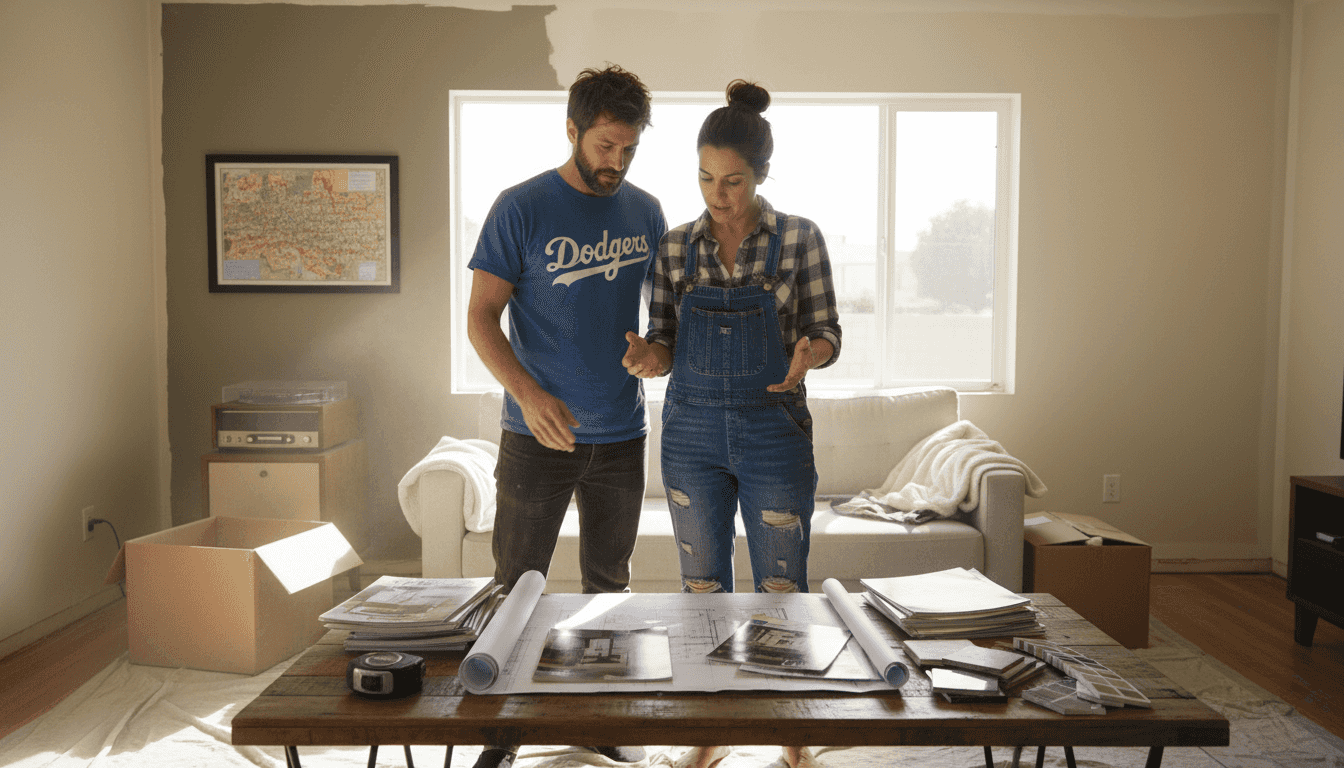
LA Renovation Planning Guide 2026: Cut Costs 25%
How to Plan a Kitchen or Bathroom Renovation in Los Angeles (Without Costly Delays)
Many Los Angeles homeowners face renovation nightmares when kitchen and bathroom projects spiral into permit delays, budget overruns, and contractor disputes. Poor planning transforms dream upgrades into costly headaches that stretch timelines by months.
This guide delivers a proven roadmap to navigate LA’s complex permitting landscape, hire reliable contractors, and execute renovations that stay on budget and schedule while maximizing your home’s value.
Key Takeaways
| Point | Details |
|---|---|
| Permits First | Securing building permits adds 2–4 weeks but prevents legal penalties and rework. |
| Budget Contingency | A 10% contingency fund protects against unforeseen costs that derail 50% of renovation projects. |
| Licensed Contractors | Verified licensed LA contractors reduce delays and quality issues by approximately 30%. |
| Timeline Precision | Phased execution with permit planning completes remodels in 6–8 weeks. |
| Value Boost | Properly planned remodels increase LA home value by 5–8%. |
Introduction to Renovation Planning in Los Angeles
Los Angeles homeowners operate in one of the most competitive and regulation-heavy remodeling markets in the U.S. Strict permitting requirements, seismic codes, and water conservation mandates significantly impact kitchen and bathroom renovations.
Common Pitfalls
- Underestimating permit complexity
- Failing to verify contractor licensing and insurance
- Ignoring LA-specific building codes
- Setting unrealistic budgets
- Poor contractor communication
Step 1: Defining Scope and Budget
Typical Los Angeles Renovation Costs
| Project Type | LA Cost Range | Permit Required | Timeline |
|---|---|---|---|
| Kitchen Cosmetic | $25,000–$40,000 | Usually No | 3–4 weeks |
| Kitchen Full Remodel | $50,000–$70,000 | Yes | 6–8 weeks |
| Bathroom Update | $15,000–$25,000 | Sometimes | 3–5 weeks |
| Bathroom Full Remodel | $30,000–$40,000 | Yes | 5–7 weeks |
Budget Planning Process
- List desired changes with priorities
- Obtain three licensed contractor quotes
- Add 10% contingency
- Separate must-haves from upgrades
- Create a written scope agreement
Step 2: Hiring and Vetting Contractors
Essential Vetting Steps
- Verify license through CSLB database
- Confirm insurance coverage
- Check at least three recent references
- Review online ratings
- Request detailed payment schedule
| Contractor Type | Advantages | Risks |
|---|---|---|
| Licensed LA Specialist | Permit expertise, legal protection | Higher upfront cost |
| Unlicensed Worker | Lower rates | Legal liability, no insurance |
| Out-of-Area Contractor | Competitive pricing | Permit unfamiliarity |
Step 3: Project Timeline Phases
- Permit approval (2–4 weeks)
- Demolition (3–5 days)
- Framing (1–2 weeks)
- Plumbing & Electrical (1–2 weeks)
- Inspection approval
- Finishing work (2–3 weeks)
- Final inspection
Complete remodels typically take 6–8 weeks post-permit approval.
Step 4: Managing Living Conditions
- Set up a temporary kitchen
- Arrange alternative bathroom access
- Create dust barriers
- Establish worker hours in writing
- Require daily cleanup
Step 5: Common Mistakes
- Skipping permits
- Hiring unlicensed contractors
- No contingency budget
- DIY electrical/plumbing work
- Poor documentation
Expected Results
| Metric | Excellent | Acceptable | Concerning |
|---|---|---|---|
| Timeline | On Schedule | +2 Weeks | +4 Weeks |
| Budget | Within Contingency | Within 10% | 15%+ Over |
| Inspection | First Pass | Second Pass | 3+ Attempts |
ROI Expectation: Kitchen remodels add 6–8% value. Bathroom remodels add 5–7% value in Los Angeles.
Frequently Asked Questions
What permits are required?
Structural, plumbing, and electrical changes require LADBS permits. Cosmetic updates typically do not.
How long does renovation take?
6–8 weeks including permits. Cosmetic projects take 3–5 weeks.
Should I include contingency?
Yes. At least 10% protects against hidden issues discovered during demolition.
Ready to Start Your Los Angeles Renovation?
Work with licensed professionals who understand LA permits, timelines, and budget management.
Design in Home Remodeling LA 2026: Boost Space Efficiency 30%
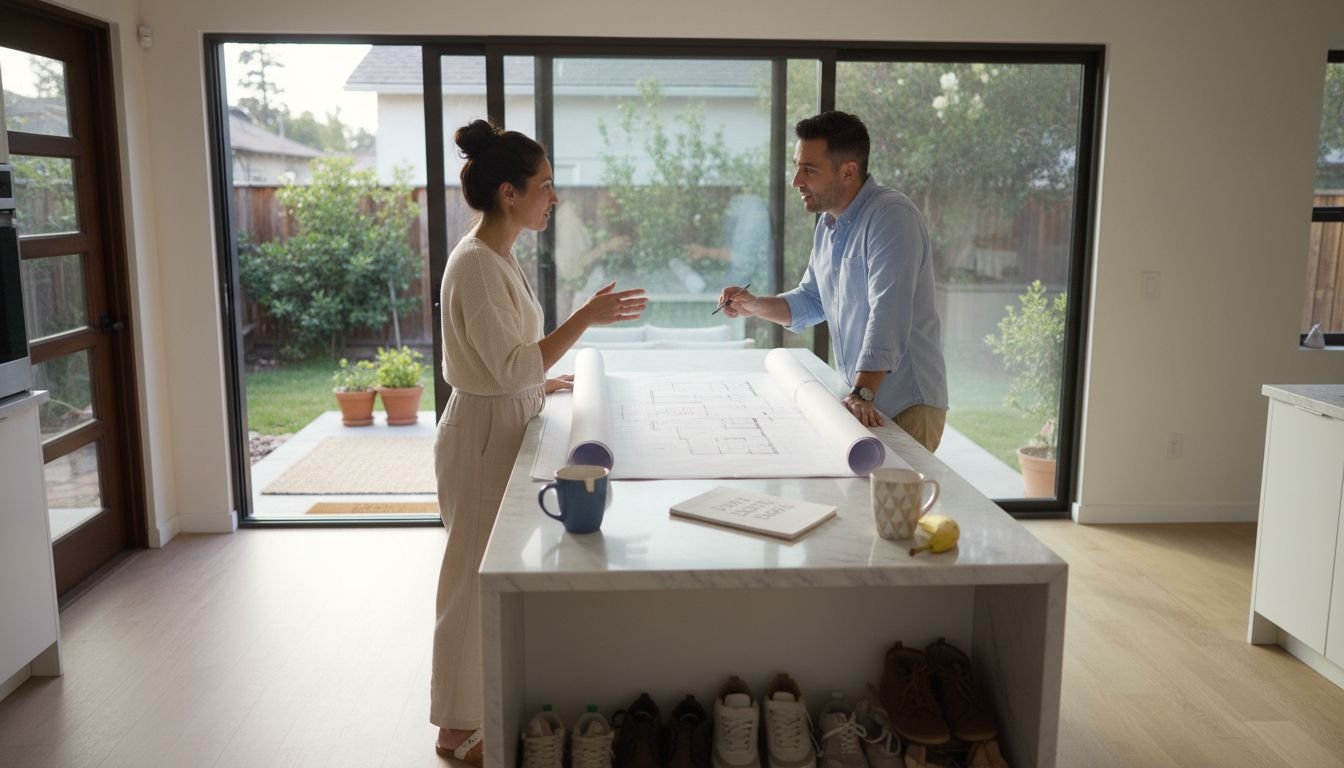
Professional design in home remodeling goes far beyond picking paint colors. Many Los Angeles homeowners underestimate design’s power to transform functionality and budget control. Design-driven kitchen remodels can improve space efficiency by up to 30%, even in small or awkward layouts. This guide explains how integrating professional design with professional flat-rate remodeling services in Los Angeles delivers better outcomes for kitchen and bathroom projects.
Table of Contents
- Understanding The Role Of Design In Home Remodeling
- How Design Enhances Functionality And Space Optimization
- Design’s Role In Budget Management And Cost Control
- Common Misconceptions About Design In Remodeling
- Integrating Design Into Flat-Rate Remodeling Services
- A Practical Framework For Evaluating Remodeling Designs
- Design’s Influence On Property Value And Homeowner Satisfaction
- Explore Expert Remodeling Services With Design Integration
- Frequently Asked Questions About Design In Home Remodeling
Key Takeaways
| Point | Details |
|---|---|
| Design improves efficiency | Professional design increases space efficiency by up to 30% and reduces daily task time by 25%. |
| Budget control matters | Early design integration reduces change orders by 25% and prevents cost overruns of 20-30%. |
| Misconceptions limit success | 60% of homeowners incorrectly view design as only aesthetics, missing its functional and financial benefits. |
| Flat-rate advantage | Combining flat-rate remodeling with design reduces disputes by 40% and boosts budget confidence by 35%. |
| ROI and satisfaction | Design-informed remodels deliver 15-20% better ROI and significantly higher homeowner satisfaction. |
Understanding the Role of Design in Home Remodeling
Design in home remodeling is a strategic discipline that balances three critical elements: aesthetics, functionality, and budget. Too many homeowners think design only affects how their kitchen or bathroom looks. This narrow view leads to costly mistakes and underperforming spaces.
Professional design minimizes remodeling errors by addressing layout inefficiencies before construction begins. It ensures your new kitchen workflow supports how you actually cook, or your bathroom accommodates your morning routine without bottlenecks. When you work with expert remodeling design in Los Angeles, you get solutions tailored to your home’s unique constraints and your lifestyle needs.
The strategic value of design includes:
- Space optimization: Maximizing usable square footage through smart layouts and storage solutions
- Workflow efficiency: Reducing steps and time spent on daily tasks
- Material selection: Choosing finishes that match your budget and durability needs
- Future-proofing: Anticipating long-term needs like aging in place or resale value
- Code compliance: Ensuring designs meet Los Angeles building requirements
Design is not decoration. It is the foundation that determines whether your remodel succeeds or disappoints.
How Design Enhances Functionality and Space Optimization
The difference between a good remodel and a great one often comes down to functional design. Professional design can increase space efficiency by up to 30%, which translates to more usable square footage without expanding your footprint. In Los Angeles homes where space comes at a premium, this benefit is substantial.
Consider how design impacts daily kitchen tasks. A well-designed work triangle between sink, stove, and refrigerator can reduce meal prep time by approximately 25%. Strategic placement of storage, countertops, and appliances eliminates wasted motion. The same principles apply to bathroom layouts where morning routines become smoother with proper spacing and fixture placement.
| Design Element | Functional Benefit | Space Impact |
|---|---|---|
| Work triangle optimization | 25% faster task completion | Reduces unnecessary steps |
| Vertical storage solutions | 40% more storage capacity | Free floor space |
| Multi-function fixtures | Dual-purpose usage | Eliminates redundant elements |
| Strategic lighting zones | Improves usability by time of day | Enhances perceived space |
| Traffic flow planning | Reduces congestion points | Maximizes effective area |
Los Angeles homes present unique design challenges. Many feature older layouts with compartmentalized rooms, limited natural light, or awkward angles. Professional designers adapt these constraints into advantages. They understand local architectural styles, climate considerations for material selection, and how to work within typical LA lot configurations.
Key functional improvements from design:
- Custom storage that fits your specific items and habits
- Lighting plans that address natural light limitations
- Ventilation solutions for California’s varied microclimates
- Durable materials suited to high-use areas
- Accessible features that support all household members
Pro Tip: Before finalizing your design, live with a cardboard mockup of your new layout for a week. This reveals workflow issues that drawings cannot capture, especially in kitchens where you will discover if proposed placements actually support your cooking style.
Design’s Role in Budget Management and Cost Control
Poor design planning is expensive. Homeowners who skip professional design or choose inadequate design services often face cost increases of 20-30% due to mid-project changes and inefficiencies. These overruns stem from discovering layout problems after construction begins, when fixes require expensive demolition and rework.
Professional design prevents these scenarios. Design incorporation reduces change orders by 25% because thorough planning catches issues on paper rather than in your partially demolished kitchen. When you combine quality design with flat-rate remodeling services in Los Angeles, you get predictable pricing based on a complete plan, not estimates that balloon as problems emerge.
Early design integration delivers budget benefits:
- Accurate material quantities: Precise measurements prevent over-ordering or shortages
- Coordinated trades: Clear plans reduce contractor confusion and delays
- Value engineering: Identifying cost-effective alternatives before purchasing
- Permit clarity: Complete designs streamline approval processes
- Timeline efficiency: Detailed plans enable faster, more organized construction
The flat-rate remodeling model amplifies these advantages. Instead of hourly billing that incentivizes slow work, flat-rate pricing rewards efficient execution. Contractors complete projects faster because delays hurt their margins, not yours. Design clarity is essential for flat-rate success because both parties need agreement on scope before work begins.
Pro Tip: Request a detailed specification sheet alongside your design drawings. This document lists every material, finish, fixture, and appliance with model numbers and costs. It eliminates ambiguity that leads to budget disputes and ensures you get exactly what you approved.
Common Misconceptions About Design in Remodeling
Surveys show that 60% of homeowners misunderstand design as solely aesthetic, overlooking its functional and financial dimensions. This misconception leads to underinvestment in design services and disappointing remodeling outcomes. Understanding what design actually encompasses helps you make better decisions.
Misconception 1: Design is just about looks. Reality: Design integrates aesthetics with functionality, ergonomics, building codes, material performance, and budget constraints. A beautiful kitchen that lacks adequate prep space or storage fails its primary purpose.
Misconception 2: Cheaper design saves money overall. Reality: Inadequate design creates expensive problems. You pay for design either way—upfront with a professional or later through change orders, delays, and compromises. The latter almost always costs more.
Misconception 3: Design and decorating are the same. Reality: Interior decorating selects colors, furniture, and accessories for existing spaces. Design creates the space itself—determining layout, infrastructure, built-ins, and permanent elements. Decorating happens after design and construction.
Misconception 4: You can skip design with good contractors. Reality: Skilled contractors execute plans brilliantly but are not trained spatial planners or budget strategists. They need a clear design direction to deliver optimal results.
Common myths that limit remodeling success:
- Good design is only for large, expensive projects
- DIY design from online tools matches professional expertise
- Design decisions can be made during construction without consequences
- Standard layouts work for everyone without customization
- Design fees represent unnecessary overhead rather than a cost-saving investment
Educating yourself on design misconceptions in remodeling protects you from expensive mistakes. Professional design is not a luxury—it is the difference between a remodel that serves you well for decades and one that requires early replacement due to functional failures.
Integrating Design into Flat-Rate Remodeling Services
Flat Rate Remodeling demonstrates how design integration transforms project outcomes. Firms that include professional design in their flat-rate remodeling approach see 40% fewer disputes and 35% better budget confidence compared to traditional hourly models without integrated design. These improvements stem from clarity and alignment before hammers swing.
The flat-rate with design model works through upfront investment in comprehensive planning. You and your remodeler agree on every detail—layout, materials, finishes, fixtures—before signing a contract. This process takes longer initially, but it eliminates the uncertainty that plagues traditional remodeling. You know your total cost, timeline, and exactly what you will receive.
Case studies from Los Angeles kitchen and bathroom remodels show:
- 15% average cost savings compared to hourly billing projects
- 20% faster completion times due to better coordination
- 90% of projects finish within 5% of original budget
- Significantly higher homeowner satisfaction scores
| Approach | Dispute Rate | Budget Overruns | Timeline Accuracy | Homeowner Confidence |
|---|---|---|---|---|
| Flat-rate with design | Low (10%) | Minimal (5%) | High (95%) | Very high (90%) |
| Hourly without design | High (40%) | Significant (25%) | Moderate (70%) | Moderate (55%) |
| Flat-rate without design | Moderate (25%) | Moderate (15%) | Moderate (75%) | Moderate (65%) |
The flat-rate remodeling with design in Los Angeles approach benefits both homeowners and contractors:
- Homeowners get price certainty, visual previews, and confidence that their vision will be executed correctly
- Contractors can schedule efficiently, order materials accurately, and avoid costly rework
- Both parties reduce conflict because expectations are documented and agreed upon
Pro Tip: When evaluating flat-rate remodeling proposals, confirm the design phase includes at least two revision rounds and 3D renderings of key views. These tools ensure you truly understand what you are approving and prevent costly misunderstandings.
A Practical Framework for Evaluating Remodeling Designs
Homeowners need a systematic way to assess design proposals. This framework balances the three core design criteria—aesthetics, functionality, and budget—to guide your decision-making.
Step 1: Define your priorities. Rank these criteria by importance for your situation. A growing family may prioritize functionality over aesthetics. A homeowner planning to sell soon might emphasize cost-effective updates that boost value.
Step 2: Evaluate each design element against all three criteria. Use this scoring approach:
| Design Element | Aesthetics (1-5) | Functionality (1-5) | Budget Impact (1-5) | Total Score |
|---|---|---|---|---|
| Layout option A | 4 | 5 | 3 | 12 |
| Layout option B | 5 | 3 | 2 | 10 |
| Cabinet style X | 3 | 4 | 5 | 12 |
| Cabinet style Y | 5 | 4 | 2 | 11 |
Step 3: Engage professionals early. Schedule design consultations before making irreversible decisions. Professional designers spot problems you will miss and suggest solutions you have not considered.
Step 4: Use visual tools. Insist on 3D renderings or virtual walkthroughs. Two-dimensional drawings are hard to interpret. Seeing your space from eye level reveals how design choices actually feel.
Step 5: Test workflows mentally. Walk through your typical routines using the design layout. For kitchens, trace meal prep sequences. For bathrooms, consider morning and evening patterns. Identify friction points before construction.
Key questions when evaluating remodeling designs:
- Does this layout support how I actually use the space daily?
- Can I afford not just construction but also the specified materials and finishes?
- Will this design remain functional as my household changes over the next 10-15 years?
- Does the aesthetic align with my home’s overall style and the neighborhood context?
- Are there code requirements or structural limitations I have not accounted for?
Pro Tip: Create a decision matrix that weights your priorities. If functionality is twice as important to you as aesthetics, double the functionality score before calculating totals. This personalizes the framework to your specific needs rather than treating all criteria equally.
Design’s Influence on Property Value and Homeowner Satisfaction
Well-executed design delivers measurable returns. Design-informed kitchen and bathroom remodels typically boost property value by 15-20%, outperforming projects that focus only on cosmetic updates. This ROI advantage stems from buyers recognizing functional layouts and quality material choices.
In the Los Angeles market, design alignment with local preferences is crucial. Buyers expect certain features—adequate storage, quality countertops, modern fixtures—and will discount homes that lack them. Professional designers understand these market expectations and incorporate them without explicitly telling you to “design for resale.”
Homeowner satisfaction depends on how well the finished space matches daily needs. Surveys consistently show higher satisfaction scores when:
- Design accommodates the homeowner’s specific lifestyle and habits
- Layouts reduce frustration from the old configuration
- Material choices deliver expected durability and maintenance ease
- The finished aesthetic reflects the homeowner’s taste, not generic trends
Long-term benefits of quality design:
- Reduced maintenance costs: Appropriate materials last longer and require less upkeep
- Energy efficiency: Smart design incorporates better insulation, lighting, and ventilation
- Adaptability: Thoughtful layouts accommodate changing needs without major renovations
- Emotional value: Spaces you love improve daily quality of life beyond financial measures
The Los Angeles lifestyle emphasizes indoor-outdoor living, entertaining, and design-forward aesthetics. Remodels that increase property value in Los Angeles incorporate these local preferences while maintaining functionality and staying within budget. This balance requires professional expertise to execute successfully.
Investing in professional design is not spending money on intangibles. It is securing measurable financial returns and daily satisfaction that inferior design cannot deliver.
Explore Expert Remodeling Services with Design Integration
Now that you understand design’s critical role, take action on your kitchen or bathroom remodel. Flat Rate Remodeling’s expert kitchen and bathroom services combine transparent flat-rate pricing with professional design integration, giving you the predictability and quality this guide emphasizes.
With over 25 years of Los Angeles remodeling experience, Flat Rate Remodeling understands local home styles, building requirements, and homeowner priorities. Their design-inclusive approach eliminates budget surprises while optimizing your space for maximum efficiency and satisfaction. You receive complete design documentation, 3D visualizations, and a fixed price before construction begins—no hourly billing uncertainty or mid-project cost escalations. Schedule a free design consultation to see how integrated design and flat-rate remodeling deliver better outcomes for your home.
Frequently Asked Questions About Design in Home Remodeling
What is the difference between design and decorating in remodeling?
Design creates the space itself—layouts, built-ins, infrastructure, and permanent elements. Decorating selects furniture, accessories, and colors for existing spaces. You need design before construction and decorating after completion.
How does design integration work with flat-rate remodeling?
Professional designers create complete plans, including layouts, materials, and specifications, before contractors provide flat-rate quotes. This ensures accurate pricing and eliminates costly mid-project changes. Both parties agree on the exact scope upfront.
Can design really reduce my remodeling costs?
Yes, professional design reduces change orders by 25% and prevents cost overruns of 20-30% by catching problems during planning rather than construction. Early design investment saves significantly more than it costs.
How do I evaluate if a remodeling design is right for me?
Use a framework that scores each design element on aesthetics, functionality, and budget impact based on your priorities. Test workflows mentally, review 3D renderings, and confirm the design supports your daily routines.
Why is space optimization important in Los Angeles remodels?
Los Angeles real estate costs make every square foot valuable. Design-driven remodels improve space efficiency by up to 30%, giving you more usable area without expensive expansions. This benefit is especially critical in smaller or older homes.
What questions should I ask during design consultations?
Ask how the designer will accommodate your specific lifestyle, what revision process they offer, whether proposals include 3D visualizations, and how they ensure designs stay within budget. Confirm their experience with remodeling design FAQs and local Los Angeles projects.
Recommended