
LA Renovation Planning Guide 2026: Cut Costs 25%
How to Plan a Kitchen or Bathroom Renovation in Los Angeles (Without Costly Delays)
Many Los Angeles homeowners face renovation nightmares when kitchen and bathroom projects spiral into permit delays, budget overruns, and contractor disputes. Poor planning transforms dream upgrades into costly headaches that stretch timelines by months.
This guide delivers a proven roadmap to navigate LA’s complex permitting landscape, hire reliable contractors, and execute renovations that stay on budget and schedule while maximizing your home’s value.
Key Takeaways
| Point | Details |
|---|---|
| Permits First | Securing building permits adds 2–4 weeks but prevents legal penalties and rework. |
| Budget Contingency | A 10% contingency fund protects against unforeseen costs that derail 50% of renovation projects. |
| Licensed Contractors | Verified licensed LA contractors reduce delays and quality issues by approximately 30%. |
| Timeline Precision | Phased execution with permit planning completes remodels in 6–8 weeks. |
| Value Boost | Properly planned remodels increase LA home value by 5–8%. |
Introduction to Renovation Planning in Los Angeles
Los Angeles homeowners operate in one of the most competitive and regulation-heavy remodeling markets in the U.S. Strict permitting requirements, seismic codes, and water conservation mandates significantly impact kitchen and bathroom renovations.
Common Pitfalls
- Underestimating permit complexity
- Failing to verify contractor licensing and insurance
- Ignoring LA-specific building codes
- Setting unrealistic budgets
- Poor contractor communication
Step 1: Defining Scope and Budget
Typical Los Angeles Renovation Costs
| Project Type | LA Cost Range | Permit Required | Timeline |
|---|---|---|---|
| Kitchen Cosmetic | $25,000–$40,000 | Usually No | 3–4 weeks |
| Kitchen Full Remodel | $50,000–$70,000 | Yes | 6–8 weeks |
| Bathroom Update | $15,000–$25,000 | Sometimes | 3–5 weeks |
| Bathroom Full Remodel | $30,000–$40,000 | Yes | 5–7 weeks |
Budget Planning Process
- List desired changes with priorities
- Obtain three licensed contractor quotes
- Add 10% contingency
- Separate must-haves from upgrades
- Create a written scope agreement
Step 2: Hiring and Vetting Contractors
Essential Vetting Steps
- Verify license through CSLB database
- Confirm insurance coverage
- Check at least three recent references
- Review online ratings
- Request detailed payment schedule
| Contractor Type | Advantages | Risks |
|---|---|---|
| Licensed LA Specialist | Permit expertise, legal protection | Higher upfront cost |
| Unlicensed Worker | Lower rates | Legal liability, no insurance |
| Out-of-Area Contractor | Competitive pricing | Permit unfamiliarity |
Step 3: Project Timeline Phases
- Permit approval (2–4 weeks)
- Demolition (3–5 days)
- Framing (1–2 weeks)
- Plumbing & Electrical (1–2 weeks)
- Inspection approval
- Finishing work (2–3 weeks)
- Final inspection
Complete remodels typically take 6–8 weeks post-permit approval.
Step 4: Managing Living Conditions
- Set up a temporary kitchen
- Arrange alternative bathroom access
- Create dust barriers
- Establish worker hours in writing
- Require daily cleanup
Step 5: Common Mistakes
- Skipping permits
- Hiring unlicensed contractors
- No contingency budget
- DIY electrical/plumbing work
- Poor documentation
Expected Results
| Metric | Excellent | Acceptable | Concerning |
|---|---|---|---|
| Timeline | On Schedule | +2 Weeks | +4 Weeks |
| Budget | Within Contingency | Within 10% | 15%+ Over |
| Inspection | First Pass | Second Pass | 3+ Attempts |
ROI Expectation: Kitchen remodels add 6–8% value. Bathroom remodels add 5–7% value in Los Angeles.
Frequently Asked Questions
What permits are required?
Structural, plumbing, and electrical changes require LADBS permits. Cosmetic updates typically do not.
How long does renovation take?
6–8 weeks including permits. Cosmetic projects take 3–5 weeks.
Should I include contingency?
Yes. At least 10% protects against hidden issues discovered during demolition.
Ready to Start Your Los Angeles Renovation?
Work with licensed professionals who understand LA permits, timelines, and budget management.

LA Renovation Planning Guide 2026: Cut Costs 25%
How to Plan a Kitchen or Bathroom Renovation in Los Angeles (Without Costly Delays)
Many Los Angeles homeowners face renovation nightmares when kitchen and bathroom projects spiral into permit delays, budget overruns, and contractor disputes. Poor planning transforms dream upgrades into costly headaches that stretch timelines by months.
This guide delivers a proven roadmap to navigate LA’s complex permitting landscape, hire reliable contractors, and execute renovations that stay on budget and schedule while maximizing your home’s value.
Key Takeaways
| Point | Details |
|---|---|
| Permits First | Securing building permits adds 2–4 weeks but prevents legal penalties and rework. |
| Budget Contingency | A 10% contingency fund protects against unforeseen costs that derail 50% of renovation projects. |
| Licensed Contractors | Verified licensed LA contractors reduce delays and quality issues by approximately 30%. |
| Timeline Precision | Phased execution with permit planning completes remodels in 6–8 weeks. |
| Value Boost | Properly planned remodels increase LA home value by 5–8%. |
Introduction to Renovation Planning in Los Angeles
Los Angeles homeowners operate in one of the most competitive and regulation-heavy remodeling markets in the U.S. Strict permitting requirements, seismic codes, and water conservation mandates significantly impact kitchen and bathroom renovations.
Common Pitfalls
- Underestimating permit complexity
- Failing to verify contractor licensing and insurance
- Ignoring LA-specific building codes
- Setting unrealistic budgets
- Poor contractor communication
Step 1: Defining Scope and Budget
Typical Los Angeles Renovation Costs
| Project Type | LA Cost Range | Permit Required | Timeline |
|---|---|---|---|
| Kitchen Cosmetic | $25,000–$40,000 | Usually No | 3–4 weeks |
| Kitchen Full Remodel | $50,000–$70,000 | Yes | 6–8 weeks |
| Bathroom Update | $15,000–$25,000 | Sometimes | 3–5 weeks |
| Bathroom Full Remodel | $30,000–$40,000 | Yes | 5–7 weeks |
Budget Planning Process
- List desired changes with priorities
- Obtain three licensed contractor quotes
- Add 10% contingency
- Separate must-haves from upgrades
- Create a written scope agreement
Step 2: Hiring and Vetting Contractors
Essential Vetting Steps
- Verify license through CSLB database
- Confirm insurance coverage
- Check at least three recent references
- Review online ratings
- Request detailed payment schedule
| Contractor Type | Advantages | Risks |
|---|---|---|
| Licensed LA Specialist | Permit expertise, legal protection | Higher upfront cost |
| Unlicensed Worker | Lower rates | Legal liability, no insurance |
| Out-of-Area Contractor | Competitive pricing | Permit unfamiliarity |
Step 3: Project Timeline Phases
- Permit approval (2–4 weeks)
- Demolition (3–5 days)
- Framing (1–2 weeks)
- Plumbing & Electrical (1–2 weeks)
- Inspection approval
- Finishing work (2–3 weeks)
- Final inspection
Complete remodels typically take 6–8 weeks post-permit approval.
Step 4: Managing Living Conditions
- Set up a temporary kitchen
- Arrange alternative bathroom access
- Create dust barriers
- Establish worker hours in writing
- Require daily cleanup
Step 5: Common Mistakes
- Skipping permits
- Hiring unlicensed contractors
- No contingency budget
- DIY electrical/plumbing work
- Poor documentation
Expected Results
| Metric | Excellent | Acceptable | Concerning |
|---|---|---|---|
| Timeline | On Schedule | +2 Weeks | +4 Weeks |
| Budget | Within Contingency | Within 10% | 15%+ Over |
| Inspection | First Pass | Second Pass | 3+ Attempts |
ROI Expectation: Kitchen remodels add 6–8% value. Bathroom remodels add 5–7% value in Los Angeles.
Frequently Asked Questions
What permits are required?
Structural, plumbing, and electrical changes require LADBS permits. Cosmetic updates typically do not.
How long does renovation take?
6–8 weeks including permits. Cosmetic projects take 3–5 weeks.
Should I include contingency?
Yes. At least 10% protects against hidden issues discovered during demolition.
Ready to Start Your Los Angeles Renovation?
Work with licensed professionals who understand LA permits, timelines, and budget management.
Design in Home Remodeling LA 2026: Boost Space Efficiency 30%
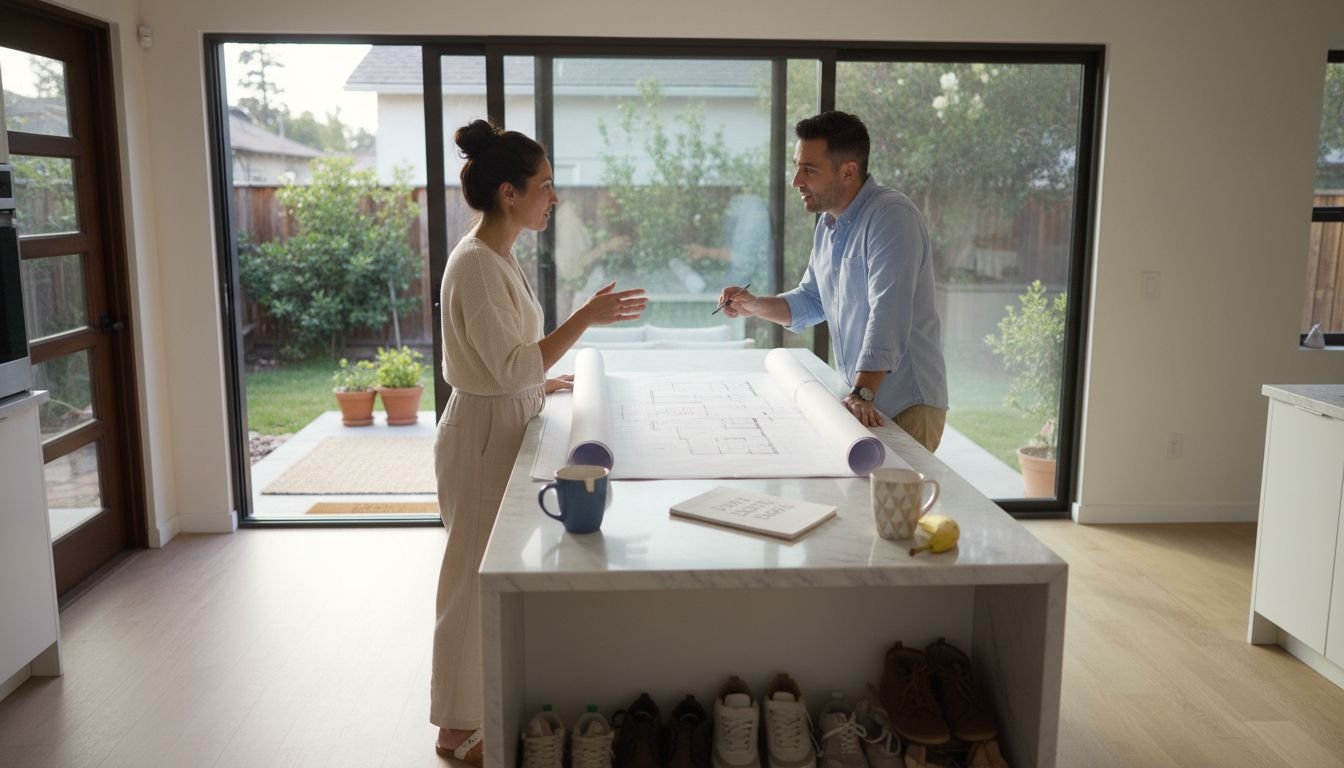
Professional design in home remodeling goes far beyond picking paint colors. Many Los Angeles homeowners underestimate design’s power to transform functionality and budget control. Design-driven kitchen remodels can improve space efficiency by up to 30%, even in small or awkward layouts. This guide explains how integrating professional design with professional flat-rate remodeling services in Los Angeles delivers better outcomes for kitchen and bathroom projects.
Table of Contents
- Understanding The Role Of Design In Home Remodeling
- How Design Enhances Functionality And Space Optimization
- Design’s Role In Budget Management And Cost Control
- Common Misconceptions About Design In Remodeling
- Integrating Design Into Flat-Rate Remodeling Services
- A Practical Framework For Evaluating Remodeling Designs
- Design’s Influence On Property Value And Homeowner Satisfaction
- Explore Expert Remodeling Services With Design Integration
- Frequently Asked Questions About Design In Home Remodeling
Key Takeaways
| Point | Details |
|---|---|
| Design improves efficiency | Professional design increases space efficiency by up to 30% and reduces daily task time by 25%. |
| Budget control matters | Early design integration reduces change orders by 25% and prevents cost overruns of 20-30%. |
| Misconceptions limit success | 60% of homeowners incorrectly view design as only aesthetics, missing its functional and financial benefits. |
| Flat-rate advantage | Combining flat-rate remodeling with design reduces disputes by 40% and boosts budget confidence by 35%. |
| ROI and satisfaction | Design-informed remodels deliver 15-20% better ROI and significantly higher homeowner satisfaction. |
Understanding the Role of Design in Home Remodeling
Design in home remodeling is a strategic discipline that balances three critical elements: aesthetics, functionality, and budget. Too many homeowners think design only affects how their kitchen or bathroom looks. This narrow view leads to costly mistakes and underperforming spaces.
Professional design minimizes remodeling errors by addressing layout inefficiencies before construction begins. It ensures your new kitchen workflow supports how you actually cook, or your bathroom accommodates your morning routine without bottlenecks. When you work with expert remodeling design in Los Angeles, you get solutions tailored to your home’s unique constraints and your lifestyle needs.
The strategic value of design includes:
- Space optimization: Maximizing usable square footage through smart layouts and storage solutions
- Workflow efficiency: Reducing steps and time spent on daily tasks
- Material selection: Choosing finishes that match your budget and durability needs
- Future-proofing: Anticipating long-term needs like aging in place or resale value
- Code compliance: Ensuring designs meet Los Angeles building requirements
Design is not decoration. It is the foundation that determines whether your remodel succeeds or disappoints.
How Design Enhances Functionality and Space Optimization
The difference between a good remodel and a great one often comes down to functional design. Professional design can increase space efficiency by up to 30%, which translates to more usable square footage without expanding your footprint. In Los Angeles homes where space comes at a premium, this benefit is substantial.
Consider how design impacts daily kitchen tasks. A well-designed work triangle between sink, stove, and refrigerator can reduce meal prep time by approximately 25%. Strategic placement of storage, countertops, and appliances eliminates wasted motion. The same principles apply to bathroom layouts where morning routines become smoother with proper spacing and fixture placement.
| Design Element | Functional Benefit | Space Impact |
|---|---|---|
| Work triangle optimization | 25% faster task completion | Reduces unnecessary steps |
| Vertical storage solutions | 40% more storage capacity | Free floor space |
| Multi-function fixtures | Dual-purpose usage | Eliminates redundant elements |
| Strategic lighting zones | Improves usability by time of day | Enhances perceived space |
| Traffic flow planning | Reduces congestion points | Maximizes effective area |
Los Angeles homes present unique design challenges. Many feature older layouts with compartmentalized rooms, limited natural light, or awkward angles. Professional designers adapt these constraints into advantages. They understand local architectural styles, climate considerations for material selection, and how to work within typical LA lot configurations.
Key functional improvements from design:
- Custom storage that fits your specific items and habits
- Lighting plans that address natural light limitations
- Ventilation solutions for California’s varied microclimates
- Durable materials suited to high-use areas
- Accessible features that support all household members
Pro Tip: Before finalizing your design, live with a cardboard mockup of your new layout for a week. This reveals workflow issues that drawings cannot capture, especially in kitchens where you will discover if proposed placements actually support your cooking style.
Design’s Role in Budget Management and Cost Control
Poor design planning is expensive. Homeowners who skip professional design or choose inadequate design services often face cost increases of 20-30% due to mid-project changes and inefficiencies. These overruns stem from discovering layout problems after construction begins, when fixes require expensive demolition and rework.
Professional design prevents these scenarios. Design incorporation reduces change orders by 25% because thorough planning catches issues on paper rather than in your partially demolished kitchen. When you combine quality design with flat-rate remodeling services in Los Angeles, you get predictable pricing based on a complete plan, not estimates that balloon as problems emerge.
Early design integration delivers budget benefits:
- Accurate material quantities: Precise measurements prevent over-ordering or shortages
- Coordinated trades: Clear plans reduce contractor confusion and delays
- Value engineering: Identifying cost-effective alternatives before purchasing
- Permit clarity: Complete designs streamline approval processes
- Timeline efficiency: Detailed plans enable faster, more organized construction
The flat-rate remodeling model amplifies these advantages. Instead of hourly billing that incentivizes slow work, flat-rate pricing rewards efficient execution. Contractors complete projects faster because delays hurt their margins, not yours. Design clarity is essential for flat-rate success because both parties need agreement on scope before work begins.
Pro Tip: Request a detailed specification sheet alongside your design drawings. This document lists every material, finish, fixture, and appliance with model numbers and costs. It eliminates ambiguity that leads to budget disputes and ensures you get exactly what you approved.
Common Misconceptions About Design in Remodeling
Surveys show that 60% of homeowners misunderstand design as solely aesthetic, overlooking its functional and financial dimensions. This misconception leads to underinvestment in design services and disappointing remodeling outcomes. Understanding what design actually encompasses helps you make better decisions.
Misconception 1: Design is just about looks. Reality: Design integrates aesthetics with functionality, ergonomics, building codes, material performance, and budget constraints. A beautiful kitchen that lacks adequate prep space or storage fails its primary purpose.
Misconception 2: Cheaper design saves money overall. Reality: Inadequate design creates expensive problems. You pay for design either way—upfront with a professional or later through change orders, delays, and compromises. The latter almost always costs more.
Misconception 3: Design and decorating are the same. Reality: Interior decorating selects colors, furniture, and accessories for existing spaces. Design creates the space itself—determining layout, infrastructure, built-ins, and permanent elements. Decorating happens after design and construction.
Misconception 4: You can skip design with good contractors. Reality: Skilled contractors execute plans brilliantly but are not trained spatial planners or budget strategists. They need a clear design direction to deliver optimal results.
Common myths that limit remodeling success:
- Good design is only for large, expensive projects
- DIY design from online tools matches professional expertise
- Design decisions can be made during construction without consequences
- Standard layouts work for everyone without customization
- Design fees represent unnecessary overhead rather than a cost-saving investment
Educating yourself on design misconceptions in remodeling protects you from expensive mistakes. Professional design is not a luxury—it is the difference between a remodel that serves you well for decades and one that requires early replacement due to functional failures.
Integrating Design into Flat-Rate Remodeling Services
Flat Rate Remodeling demonstrates how design integration transforms project outcomes. Firms that include professional design in their flat-rate remodeling approach see 40% fewer disputes and 35% better budget confidence compared to traditional hourly models without integrated design. These improvements stem from clarity and alignment before hammers swing.
The flat-rate with design model works through upfront investment in comprehensive planning. You and your remodeler agree on every detail—layout, materials, finishes, fixtures—before signing a contract. This process takes longer initially, but it eliminates the uncertainty that plagues traditional remodeling. You know your total cost, timeline, and exactly what you will receive.
Case studies from Los Angeles kitchen and bathroom remodels show:
- 15% average cost savings compared to hourly billing projects
- 20% faster completion times due to better coordination
- 90% of projects finish within 5% of original budget
- Significantly higher homeowner satisfaction scores
| Approach | Dispute Rate | Budget Overruns | Timeline Accuracy | Homeowner Confidence |
|---|---|---|---|---|
| Flat-rate with design | Low (10%) | Minimal (5%) | High (95%) | Very high (90%) |
| Hourly without design | High (40%) | Significant (25%) | Moderate (70%) | Moderate (55%) |
| Flat-rate without design | Moderate (25%) | Moderate (15%) | Moderate (75%) | Moderate (65%) |
The flat-rate remodeling with design in Los Angeles approach benefits both homeowners and contractors:
- Homeowners get price certainty, visual previews, and confidence that their vision will be executed correctly
- Contractors can schedule efficiently, order materials accurately, and avoid costly rework
- Both parties reduce conflict because expectations are documented and agreed upon
Pro Tip: When evaluating flat-rate remodeling proposals, confirm the design phase includes at least two revision rounds and 3D renderings of key views. These tools ensure you truly understand what you are approving and prevent costly misunderstandings.
A Practical Framework for Evaluating Remodeling Designs
Homeowners need a systematic way to assess design proposals. This framework balances the three core design criteria—aesthetics, functionality, and budget—to guide your decision-making.
Step 1: Define your priorities. Rank these criteria by importance for your situation. A growing family may prioritize functionality over aesthetics. A homeowner planning to sell soon might emphasize cost-effective updates that boost value.
Step 2: Evaluate each design element against all three criteria. Use this scoring approach:
| Design Element | Aesthetics (1-5) | Functionality (1-5) | Budget Impact (1-5) | Total Score |
|---|---|---|---|---|
| Layout option A | 4 | 5 | 3 | 12 |
| Layout option B | 5 | 3 | 2 | 10 |
| Cabinet style X | 3 | 4 | 5 | 12 |
| Cabinet style Y | 5 | 4 | 2 | 11 |
Step 3: Engage professionals early. Schedule design consultations before making irreversible decisions. Professional designers spot problems you will miss and suggest solutions you have not considered.
Step 4: Use visual tools. Insist on 3D renderings or virtual walkthroughs. Two-dimensional drawings are hard to interpret. Seeing your space from eye level reveals how design choices actually feel.
Step 5: Test workflows mentally. Walk through your typical routines using the design layout. For kitchens, trace meal prep sequences. For bathrooms, consider morning and evening patterns. Identify friction points before construction.
Key questions when evaluating remodeling designs:
- Does this layout support how I actually use the space daily?
- Can I afford not just construction but also the specified materials and finishes?
- Will this design remain functional as my household changes over the next 10-15 years?
- Does the aesthetic align with my home’s overall style and the neighborhood context?
- Are there code requirements or structural limitations I have not accounted for?
Pro Tip: Create a decision matrix that weights your priorities. If functionality is twice as important to you as aesthetics, double the functionality score before calculating totals. This personalizes the framework to your specific needs rather than treating all criteria equally.
Design’s Influence on Property Value and Homeowner Satisfaction
Well-executed design delivers measurable returns. Design-informed kitchen and bathroom remodels typically boost property value by 15-20%, outperforming projects that focus only on cosmetic updates. This ROI advantage stems from buyers recognizing functional layouts and quality material choices.
In the Los Angeles market, design alignment with local preferences is crucial. Buyers expect certain features—adequate storage, quality countertops, modern fixtures—and will discount homes that lack them. Professional designers understand these market expectations and incorporate them without explicitly telling you to “design for resale.”
Homeowner satisfaction depends on how well the finished space matches daily needs. Surveys consistently show higher satisfaction scores when:
- Design accommodates the homeowner’s specific lifestyle and habits
- Layouts reduce frustration from the old configuration
- Material choices deliver expected durability and maintenance ease
- The finished aesthetic reflects the homeowner’s taste, not generic trends
Long-term benefits of quality design:
- Reduced maintenance costs: Appropriate materials last longer and require less upkeep
- Energy efficiency: Smart design incorporates better insulation, lighting, and ventilation
- Adaptability: Thoughtful layouts accommodate changing needs without major renovations
- Emotional value: Spaces you love improve daily quality of life beyond financial measures
The Los Angeles lifestyle emphasizes indoor-outdoor living, entertaining, and design-forward aesthetics. Remodels that increase property value in Los Angeles incorporate these local preferences while maintaining functionality and staying within budget. This balance requires professional expertise to execute successfully.
Investing in professional design is not spending money on intangibles. It is securing measurable financial returns and daily satisfaction that inferior design cannot deliver.
Explore Expert Remodeling Services with Design Integration
Now that you understand design’s critical role, take action on your kitchen or bathroom remodel. Flat Rate Remodeling’s expert kitchen and bathroom services combine transparent flat-rate pricing with professional design integration, giving you the predictability and quality this guide emphasizes.
With over 25 years of Los Angeles remodeling experience, Flat Rate Remodeling understands local home styles, building requirements, and homeowner priorities. Their design-inclusive approach eliminates budget surprises while optimizing your space for maximum efficiency and satisfaction. You receive complete design documentation, 3D visualizations, and a fixed price before construction begins—no hourly billing uncertainty or mid-project cost escalations. Schedule a free design consultation to see how integrated design and flat-rate remodeling deliver better outcomes for your home.
Frequently Asked Questions About Design in Home Remodeling
What is the difference between design and decorating in remodeling?
Design creates the space itself—layouts, built-ins, infrastructure, and permanent elements. Decorating selects furniture, accessories, and colors for existing spaces. You need design before construction and decorating after completion.
How does design integration work with flat-rate remodeling?
Professional designers create complete plans, including layouts, materials, and specifications, before contractors provide flat-rate quotes. This ensures accurate pricing and eliminates costly mid-project changes. Both parties agree on the exact scope upfront.
Can design really reduce my remodeling costs?
Yes, professional design reduces change orders by 25% and prevents cost overruns of 20-30% by catching problems during planning rather than construction. Early design investment saves significantly more than it costs.
How do I evaluate if a remodeling design is right for me?
Use a framework that scores each design element on aesthetics, functionality, and budget impact based on your priorities. Test workflows mentally, review 3D renderings, and confirm the design supports your daily routines.
Why is space optimization important in Los Angeles remodels?
Los Angeles real estate costs make every square foot valuable. Design-driven remodels improve space efficiency by up to 30%, giving you more usable area without expensive expansions. This benefit is especially critical in smaller or older homes.
What questions should I ask during design consultations?
Ask how the designer will accommodate your specific lifestyle, what revision process they offer, whether proposals include 3D visualizations, and how they ensure designs stay within budget. Confirm their experience with remodeling design FAQs and local Los Angeles projects.
Recommended

10 Mistakes to Avoid During a Major Home Renovation: A Guide to Successful Project Management
Insufficient Planning and Budgeting
Launching a successful website or online store requires meticulous planning and budgeting.Home Renovation Underestimating the total costs, omitting a contingency fund, and failing to create a detailed project timeline can lead to delays and added expenses, impacting a business’s overall success.
Underestimating Total Renovation Costs
Businesses often fall into the trap of underestimating the costs associated with developing a functional and appealing online presence. From design and development to ongoing maintenance and optimization, each element contributes to the final expenditure. For small to medium-sized businesses in Jerusalem that seek accessible, secure, and standard-compliant websites, understanding the full cost scope can prevent unexpected financial strain. For instance, beyond aesthetic design, functionality such as user experience (UX) requires professional inputs, potentially increasing the costs.
Omitting a Contingency Fund
Another critical oversight is failing to allocate a contingency fund. This fund can act as a financial cushion to handle unexpected challenges or opportunities during the project’s lifecycle. Whether it’s a sudden need for additional features or updates due to changing regulations, having reserved funds ensures that businesses can respond agilely without compromising on core project aspects. It’s recommended to set aside a percentage of the initial budget—typically between 10% to 20%—to accommodate these unforeseen needs.
Failing to Create a Detailed Project Timeline
Time is of the essence in web development. A well-defined project timeline ensures that every phase, from conception through to launch, is executed efficiently. Without a clear timeline, projects can drag on, delaying business goals like increased traffic and sales. For startups in their feasibility assessments, detailed timelines can act as roadmaps, aligning every team member with their responsibilities and deadlines. This approach facilitates smooth workflow and timely project completion.
Ignoring Permits and Building Regulations
In the digital realm, like in physical construction, there are equivalent permits and regulations to consider. Overlooking local code requirements, skipping necessary permit applications, and neglecting scheduled inspections can result in legal issues and project halts.
Overlooking Local Code Requirements
Especially pertinent for Jerusalem-based businesses aspiring for online visibility, adhering to local code is crucial. Websites must meet specific accessibility standards to ensure inclusivity for all users. Neglecting these regulations may not only alienate a segment of potential customers but can also lead to legal repercussions. Moreover, businesses aiming to transition from traditional retail to e-commerce must consider digital adaptability regulations.Home Renovation
Skipping Necessary Permit Applications
An overlooked yet vital step is applying for the necessary digital permits or meeting accreditation standards. For example, if your online store plans to handle sensitive data, complying with privacy laws and securing certifications for data protection becomes mandatory. These steps are integral to safeguarding customer trust and avoiding violations that can tarnish a brand’s reputation.
Neglecting Scheduled Inspections
Regular inspections during development help ensure that the website meets functional, security, and performance standards. For a business introducing a virtual store, these checks are akin to quality assurance phases in product launches. By addressing potential flaws early, businesses can launch secure and efficient platforms, enhancing user experience and maintaining trust.
Hiring Unqualified Contractors and Subcontractors
Choosing the right professionals for web development decisions is pivotal. Not verifying licenses and insurance, ignoring past project references, and failing to secure a clear contract can result in subpar deliverables, dragging the project timeline and inflating costs.Home Renovation
Not Verifying Licenses and Insurance
Hiring verified and insured contractors assures that businesses receive professional and legal services. Proper licensing is a testament to a contractor’s proficiency and adherence to industry standards, contributing to secure and quality project outputs. Moreover, having insurance protects the hiring company from liability for on-the-job accidents or errors, ensuring smooth project progression without unexpected financial liabilities.
Ignoring Past Project References
Past project references act as a portfolio showcasing a contractor’s capability and creative approach. For example, businesses seeking to establish an interactive online presence should examine contractors’ previous projects related to UX design. This verification helps determine their ability to visualize and execute what the business envisions, fostering outcomes that align with business goals.
Failing to Secure a Clear Contract
Contracts are legally binding documents outlining deliverables, timelines, and payment terms. Without a detailed contract, the scope may become vague, leading to misunderstandings and disputes. Small businesses seeking new online platforms can benefit from contracts that specifically outline terms, accountability, and expectations. This practice ensures professional commitment and accountability from all parties involved.
Cutting Corners on Materials and Quality
Opting for cheap materials or overlooking quality in website development can hinder a business’s growth and online reputation. Selecting durability, energy-efficient alternatives, and recognizing warranty guidelines can sustain an attractive, functional, and responsible web Home Renovation.
Choosing Cheap Materials Over Durability
While initial costs may tempt businesses towards cheaper options, these materials often lack durability, leading to higher maintenance and replacement expenses. High-quality hosting services, robust framework choices, and well-coded backend systems form the foundation of a reliable online store. Investing in these materials upfront guarantees long-term benefits and fewer technical issues down the line.
Overlooking Energy-Efficient Alternatives
Modern businesses, especially those conscious of environmental impacts, should prioritize energy-efficient solutions in their digital strategy. By adopting efficient server solutions and optimized coding practices, businesses can minimize their carbon footprint. This practice not only aligns with sustainable business models but also potentially reduces operational costs, appealing to eco-conscious consumers.
Neglecting Warranty and Manufacturer Guidelines
Adhering to warranty and manufacturer guidelines ensures that businesses leverage full product benefits and receive support when issues arise. Whether it’s software licenses or technical tools for site development, warranties provide a safety net guaranteeing functionality. Following these guidelines ensures continual performance, supporting a seamless customer experience.
Poor Design Choices and Layout Mistakes
The design and layout form the visual language of a website, significantly influencing user interaction and satisfaction. Poor choices, such as disregarding flow and functionality, neglecting lighting and ventilation needs, or following short-lived design trends, can alienate users rather than attract them.Home Renovation
Disregarding Flow and Functionality
Websites with intuitive navigation and logical flow enhance user engagement, leading to higher conversion rates. Businesses creating an online store or portfolio need to ensure that customers can easily find and interact with product pages, checkout processes, and service descriptions. Ignoring these aspects can result in frustrated users and lost sales Home Renovation.
Neglecting Lighting and Ventilation Needs
In an online context, “lighting” refers to elements such as contrast, color balance, and overall visual accessibility. A website’s “ventilation” involves using white space to avoid clutter, allowing users to focus on essential elements. Implementing proper lighting and ventilation principles ensures websites are appealing and easy to navigate, catering to diverse user preferences and enhancing overall user Home Renovation.
Following Short-Lived Design Trends
Design trends can be tempting with their fresh appeal; however, relying heavily on passing trends can date a website quickly. Businesses focused on longevity should balance modern aesthetics with timeless design principles. This balance ensures enduring appeal and reduces the need for costly redesigns to match shifting trends frequently.
Inadequate Communication and Project Management
Efficient communication and project management can determine a web project’s success. Failing to hold regular progress meetings, having miscommunications between stakeholders, and lacking a centralized information hub can create misunderstandings and stall progress.Home Renovation
Failing to Hold Regular Progress Meetings
Regular progress meetings keep projects on track, addressing potential challenges proactively. They facilitate open communication, creating spaces where cross-disciplinary teams can align their strategies to deliver cohesive outputs. Businesses enjoying consistent updates and aligning on goals are better positioned to meet deadlines and performance objectives.
Miscommunication Between Stakeholders
Clarity in communication with key stakeholders, such as designers, developers, and business decision-makers, prevents costly mistakes. Miscommunication can lead to misunderstandings regarding deliverables, timelines, or project objectives. Implementing clear communication channels and leveraging collaborative tools can ensure information flows seamlessly across all team members.
Lacking a Centralized Information Hub
A centralized information hub, such as a project management platform, consolidates all project-related data, updates, and communications. For businesses embarking on complex projects, such tools provide a single source of truth, ensuring everyone stays informed and synchronized. This alignment fosters cohesive project execution and empowers teams to deliver high-quality outputs.
In conclusion, the journey from conception to the successful launch of a business’s online presence demands meticulous planning, expert execution, and strategic management. By addressing potential pitfalls, businesses can establish a robust and appealing digital footprint that resonates with their target audience. For professional guidance tailored to your needs, learn more about how our expertise can elevate your online strategy.
Enhance your success today by collaborating with industry experts. Reach out to explore customized solutions that drive growth and visibility in the competitive digital marketplace.